
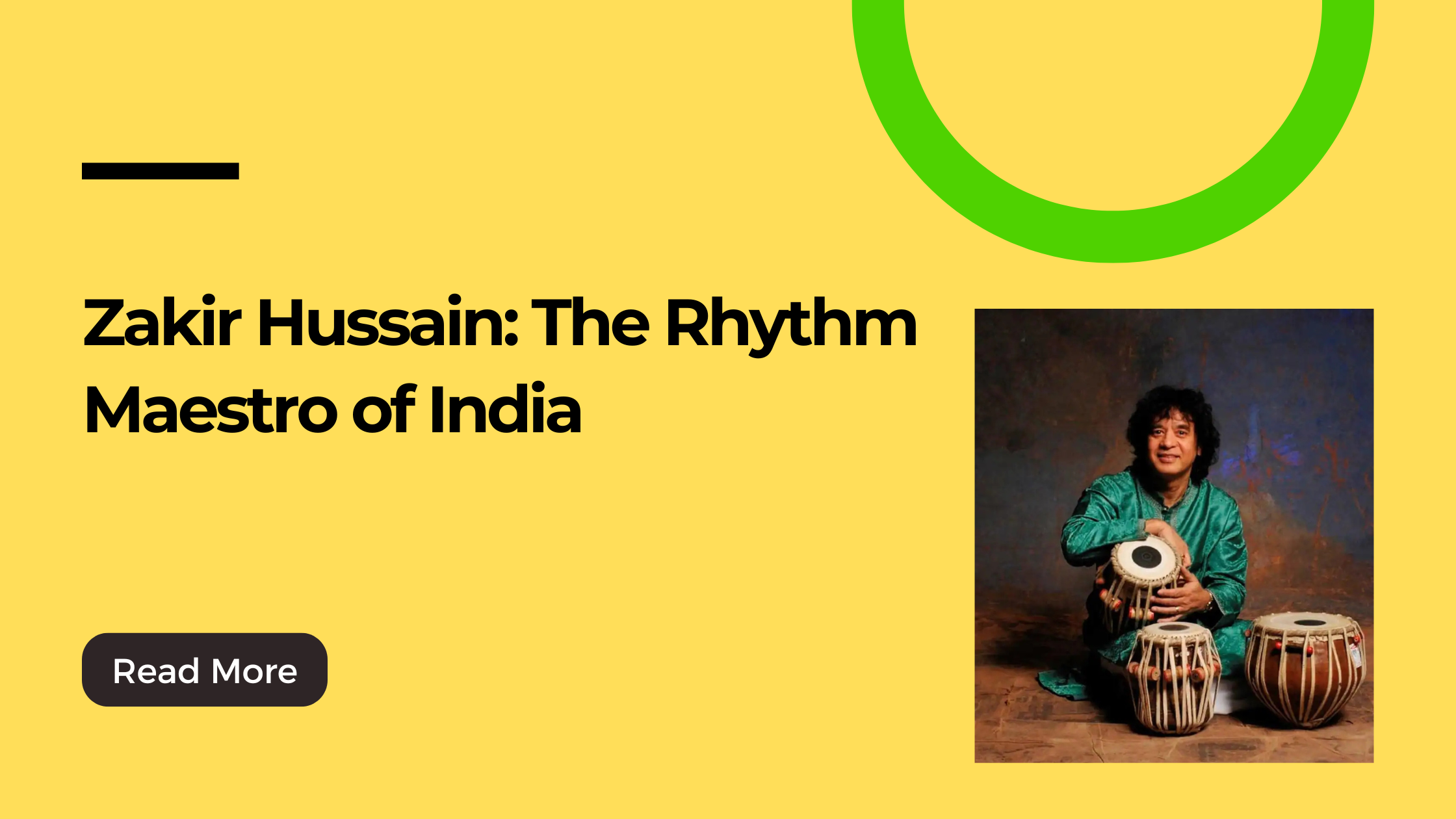
Zakir Hussain is a globally renowned tabla virtuoso, composer, percussionist, and music producer who has redefined Indian classical music and brought it to the world stage. Known for his incredible technical mastery, profound artistry, and charismatic performances, Zakir Hussain is not just an instrumentalist but a cultural icon.
Early Life and Background
Zakir Hussain was born on March 9, 1951, in Mumbai, India, into a family deeply rooted in music. His father, Ustad Allah Rakha, was a legendary tabla player and a pioneer in popularizing the instrument globally. Zakir’s journey in music began under the tutelage of his father, who recognized and nurtured his prodigious talent from a very young age.
By the time Zakir was 7, he was already accompanying seasoned musicians, and at the age of 12, he gave his first major concert performance. This early exposure to rigorous training and live performances shaped Zakir’s musical identity.
Career Highlights
Zakir Hussain’s career spans decades, during which he has performed with almost every prominent Indian classical musician and collaborated with international artists across diverse genres.
1. Indian Classical Music
Zakir Hussain has accompanied some of the greatest maestros in Indian classical music, including:
- Pt. Ravi Shankar (sitar)
- Ustad Vilayat Khan (sitar)
- Ustad Ali Akbar Khan (sarod)
- Pt. Shivkumar Sharma (santoor)
- Dr. L. Subramaniam (violin)
His intricate improvisations and rhythmic innovations have added new dimensions to the traditional tabla repertoire.
2. Global Collaborations
Zakir Hussain is celebrated for bridging Indian classical music with global genres like jazz, fusion, and world music. Some of his most notable collaborations include:
- Shakti: A fusion band with John McLaughlin and L. Shankar, blending Indian music with jazz.
- Planet Drum: A Grammy-winning percussion project with Mickey Hart of the Grateful Dead.
- Remember Shakti: A reimagined version of Shakti featuring artists like Mandolin Srinivas.
- Collaborations with iconic artists like George Harrison, Herbie Hancock, and Yo-Yo Ma.
3. Film and Composition
Zakir Hussain has also contributed significantly to film music.
- Composed music for films like “In Custody”, “Heat and Dust”, and “The Mystic Masseur”.
- Worked on the Academy Award-winning documentary “Born into Brothels”.
- Played a major role in the musical score for Richard Attenborough’s “Gandhi”.
Style and Technique of Zakir Hussain
Zakir Hussain was a true pioneer, embodying the essence of tabla playing while constantly redefining its boundaries. His style and technique are characterized by the following distinctive qualities:
Unmatched Dexterity and Precision
- Zakir Hussain’s control over the tabla allowed him to execute intricate rhythms at lightning speed with flawless accuracy.
- His ability to maintain clarity even at high tempos was a testament to his rigorous training and innate talent.
Mastery of Kaidas, Relas, and Peshkars
- Zakir was known for his deep understanding of classical tabla compositions like kaidas, relas, and peshkars, which form the foundation of Indian rhythm.
- He elevated these traditional forms with innovative variations, making them uniquely his own while honouringing their classical roots.
Polyrhythms and Cross-Rhythms
- A hallmark of Zakir’s playing was his seamless ability to integrate complex polyrhythms, often weaving multiple rhythmic cycles simultaneously.
- His innovative use of cross-rhythms, where he would blend Indian rhythmic cycles (tala) with Western time signatures, created a rhythmic conversation that transcended genres.
Blending Tradition with Modernity
- Zakir Hussain was a pioneer in fusing Indian classical music with global styles like jazz, rock, and world music.
- His collaborations with artists like John McLaughlin (Shakti), Mickey Hart (Planet Drum), and others demonstrated his versatility and openness to new ideas.
Intuitive Musicality
- Beyond technique, Zakir’s playing was deeply intuitive. He could adapt effortlessly to any musical environment, responding to melodies and harmonies with rhythmic phrases that felt organic and spontaneous.
- His tabla often served as a melodic instrument, not just a percussive one, adding layers of depth to his performances.
Masterful Improvisation
- Improvisation was at the heart of Zakir’s style. He could take a basic rhythmic idea and transform it into an elaborate, mesmerizing journey.
- His improvisational skill made each performance a unique experience, often leaving audiences in awe.
Charismatic Stage Presence
- Zakir’s warm and engaging demeanor made him not just a musician but a storyteller.
- He had a unique ability to demystify complex rhythmic concepts through humor and anecdotes, drawing audiences into the world of Indian classical music.
Global Ambassador of Indian Rhythms
- His technique bridged the gap between traditional and contemporary music, making Indian percussion accessible to global audiences.
- He introduced the world to the intricacies of Indian tala systems, becoming a cultural ambassador of Indian music on the global stage.
Impact on the Musical World
Zakir Hussain’s style and technique were a perfect blend of tradition, innovation, and emotion. He wasn’t just a tabla player—he was a rhythmic visionary who expanded the horizons of Indian classical music while staying rooted in its timeless essence. His legacy lives on as a source of inspiration for musicians across generations.
Awards and Recognition
Zakir Hussain’s contributions to music have earned him numerous accolades, including:
- Padma Shri (1988) and Padma Bhushan (2002), Padma Vibhushan (2023) , three of India’s highest civilian honours.
- National Endowment for the Arts Fellowship, the highest honouring for a traditional artist in the U.S.
- Sangeet Natak Akademi Award, India’s most prestigious recognition in performing arts.
Zakir Hussain’s Grammy Awards
Zakir Hussain, the tabla maestro, received a total of 5 Grammy Awards, showcasing his exceptional talent and contributions to music. Here is a list of his Grammy-winning projects:
1992:
Award: Best World Music Album
Project: Planet Drum
Zakir Hussain collaborated with Mickey Hart, Vikku Vinayakram, and others on this historic album, which became the first winner in the World Music category.
2009:
Award: Best Contemporary World Music Album
Project: Global Drum Project
Featuring Mickey Hart, Sikiru Adepoju, and Giovanni Hidalgo, this album combined global percussion traditions into a groundbreaking composition.
2024:
Award: Best Global Music Album
Project: This Moment (by Shakti)
As part of Shakti, Zakir Hussain, John McLaughlin, Shankar Mahadevan, Ganesh Rajagopalan, and Selvaganesh Vinayakram crafted a masterpiece blending Indian classical music and jazz.
2024:
Award: Best Contemporary Instrumental Album
Project: As We Speak
This innovative collaboration with Béla Fleck, Edgar Meyer, and Rakesh Chaurasia showcased a seamless fusion of styles and instrumental excellence.
2024:
Award: Best World Music Performance
Project: A Symphony of Rhythms
This performance brought together Indian and Western rhythmic traditions in a globally acclaimed act.
Legacy
Zakir Hussain is not just a tabla maestro but a global ambassador of Indian music. Through his performances, he has introduced the richness of Indian classical music to audiences worldwide. He has inspired generations of musicians and continues to innovate, creating a legacy that transcends borders and genres.
Philanthropy and Teaching
Zakir Hussain is also deeply committed to education and mentorship. He has conducted workshops and masterclasses worldwide, nurturing the next generation of percussionists. He often speaks about the importance of preserving traditional arts and the role of music in connecting cultures.
Death
Zakir hussain died on 15th december 2024 at the age of 73, in San Francisco, California, due to Idiopathic pulmonary fibrosis
Conclusion
Zakir Hussain is a rare artist who embodies tradition and innovation. Whether performing solo, collaborating with international musicians, or composing for films, he consistently elevates the art of tabla and Indian classical music. His work reminds us of the universal language of rhythm and the power of music to transcend barriers.
Zakir Hussain continues to perform, inspire, and push the boundaries of what music can achieve, solidifying his place as one of the greatest musicians of our time.
Zakir Hussain’s life is a testament to the enduring power of music and its ability to unite people across cultures. Through his rhythms, he has crafted a bridge between the ancient and the modern, the local and the global.