
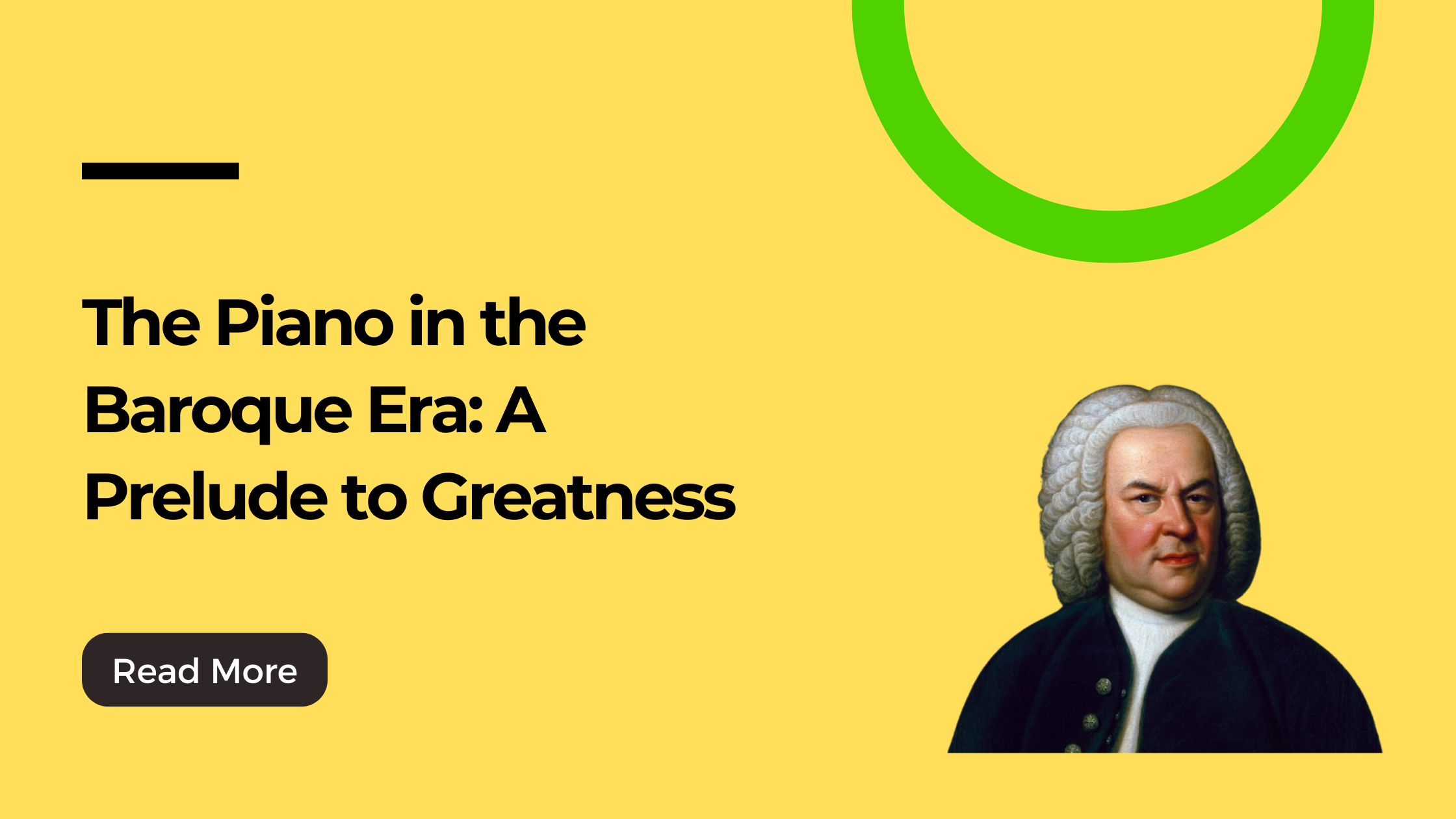
The Baroque era (1600–1750) is often regarded as the golden age of intricate polyphony and dramatic musical expression. While the modern piano had not yet emerged, the period laid a significant foundation for its development. Instruments like the harpsichord and clavichord were the stars of the era, shaping the techniques and musical language that would later influence the piano’s evolution.
1. The Precursors to the Piano
Harpsichord and Clavichord
Before the invention of the modern piano, composers wrote for the harpsichord and clavichord.
- Harpsichord: Known for its bright and resonant sound, the harpsichord plucked strings rather than hammering them, limiting its dynamic range. Despite this, its crisp articulation made it ideal for the complex polyphony of Baroque music.
- Clavichord: Offering more expressive control, the clavichord allowed for subtle dynamic variations and was often used in intimate settings, though its softer sound made it unsuitable for larger venues.
These instruments laid the groundwork for keyboard performance techniques, which would later transition seamlessly to the piano.
2. The Birth of the Piano
The piano (or fortepiano) was invented around 1700 by Bartolomeo Cristofori, an Italian instrument maker. Unlike its predecessors, the piano could produce both soft and loud sounds depending on the force with which the keys were struck. However, the instrument was still in its experimental stages during the Baroque era and did not gain widespread popularity until the Classical period.
3. Baroque Keyboard Music
Baroque composers were masters of counterpoint, creating music that combined multiple independent voices into a harmonious whole. Their works were designed to challenge performers and delight listeners with their intellectual complexity and emotional depth.
Characteristics of Baroque Keyboard Music
- Polyphony: Multiple voices or lines interweaving intricately.
- Ornamentation: Elaborate embellishments such as trills, mordents, and grace notes.
- Dance Forms: Suites comprising dances like the allemande, courante, sarabande, and gigue.
- Improvisation: Performers were expected to add their flourishes and embellishments, making each performance unique.
4. Notable Composers and Their Contributions
Johann Sebastian Bach (1685–1750)
Bach is arguably the most significant composer of the Baroque period and a cornerstone of keyboard repertoire.
- Well-Tempered Clavier: A collection of 48 preludes and fugues in all 24 major and minor keys, showcasing the possibilities of equal temperament tuning and the expressive potential of the keyboard.
- Goldberg Variations: A virtuosic set of variations that demonstrates intricate counterpoint and expressive depth.
Domenico Scarlatti (1685–1757)
Scarlatti’s keyboard sonatas are masterpieces of innovation and technical brilliance.
- Keyboard Sonatas: Over 500 single-movement works that explore dynamic contrasts, rapid hand crossings, and other techniques that push the boundaries of keyboard performance.
- Scarlatti’s music often reflects the influence of Spanish folk music, incorporating lively rhythms and unique harmonies.
George Frideric Handel (1685–1759)
Handel, renowned for his operas and oratorios, also made significant contributions to Baroque keyboard music.
- Suites for Keyboard: Handel’s suites, such as the Suite in D Minor, include dances and preludes with rich textures and ornamentation.
- Chaconne in G Major: A variation piece that showcases his ability to create depth and drama within a repetitive structure.
Handel’s keyboard works combine the drama of his vocal compositions with the technical demands of instrumental music, making them enduring favourites for performers.
5. Transition to the Piano
Although the Baroque period relied heavily on the harpsichord and clavichord, the principles of composition and performance developed during this time directly influenced the piano’s rise in later eras.
- Dynamic Range: The piano’s ability to produce both loud and soft sounds would later enhance the expressiveness of Baroque compositions.
- Technical Mastery: The virtuosic demands of Baroque keyboard music, especially works by Bach, Scarlatti, and Handel, remain essential in modern piano training.
6. Baroque Music for Modern Pianists
While Baroque composers did not write explicitly for the piano, their works are a staple of today’s piano repertoire. The adaptability of Baroque music allows pianists to explore the intellectual and emotional depth of this era while developing technical precision and interpretive skills.
Popular Baroque Piano Works
- Bach’s Prelude and Fugue in C Major from The Well-Tempered Clavier
- Scarlatti’s Sonata in E Major, K. 380
- Handel’s Sarabande from the Suite in D Minor
7. Conclusion: A Legacy of Innovation
The Baroque era was a time of immense creativity and innovation, setting the stage for the piano’s future dominance. While the instrument itself was still evolving, the music of this period remains timeless, offering pianists a glimpse into the origins of Western classical music and an opportunity to connect with its rich heritage.
Whether you’re diving into the complexities of Bach’s fugues, the brilliance of Scarlatti’s sonatas, or the drama of Handel’s suites, the Baroque era’s keyboard music continues to inspire and challenge pianists of all levels. 🎶
Which Baroque Piece Inspires You Most?
Share your thoughts and favourite Baroque piano pieces in the comments below!