
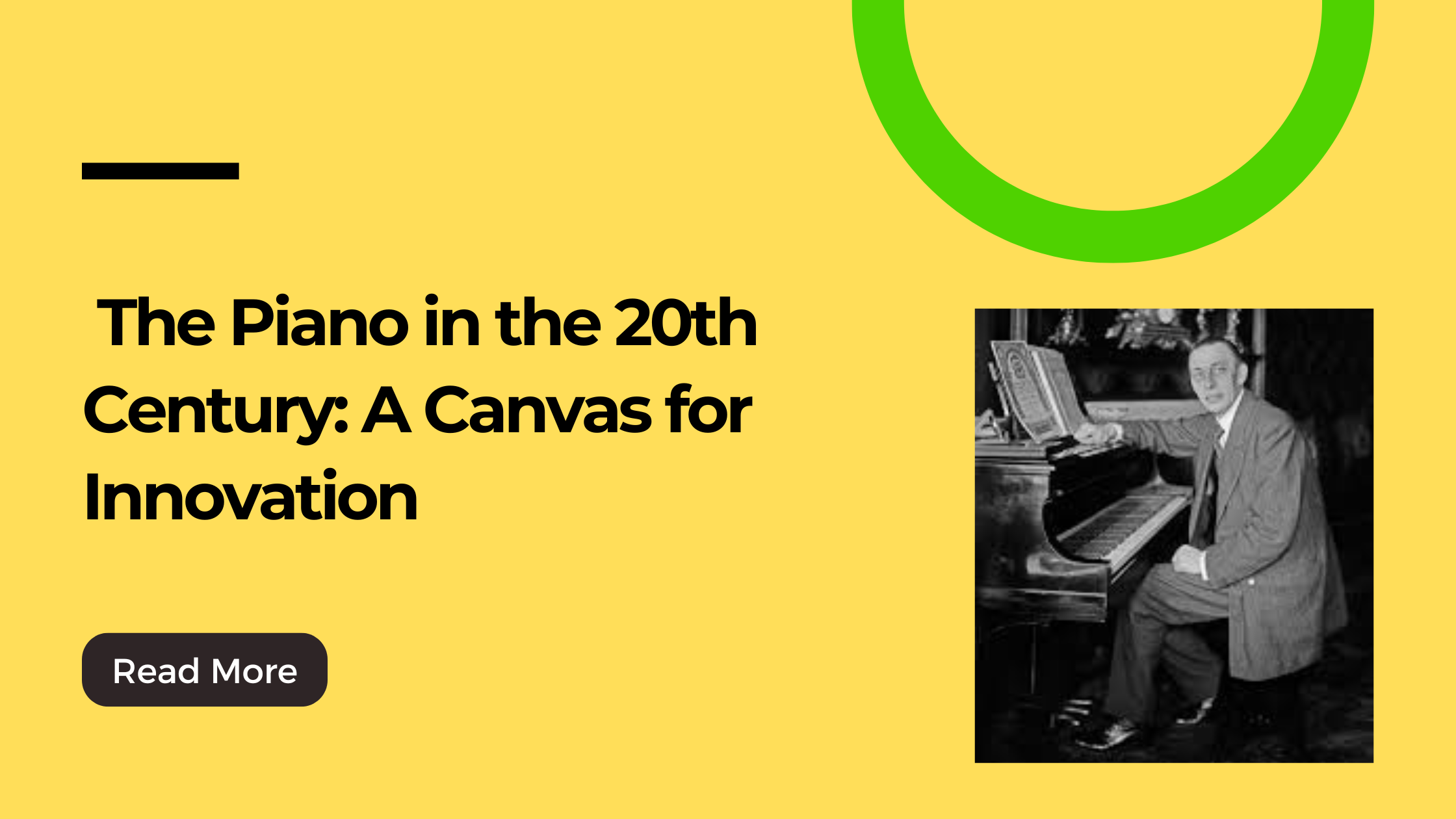
The 20th century was a time of unprecedented change in music. This era shattered the traditions of the past, embracing bold experimentation and diverse styles. The piano, with its adaptability and expressive range, became a vital tool for composers to explore new musical landscapes.
1. The Piano in the Modern Era
The piano continued to evolve in the 20th century, adapting to new demands from composers and performers.
Key Developments:
- Extended Techniques: Composers experimented with unconventional methods, such as playing directly on the strings or preparing the piano with objects to alter its sound.
- Electronic Integration: The piano began to merge with technology, leading to innovations like the electric piano and synthesizers.
- Cross-Genre Adaptability: The piano flourished in classical, jazz, and popular music, becoming a bridge between traditions and modernity.
2. Characteristics of 20th-Century Piano Music
20th-century piano music is defined by its diversity and willingness to challenge conventions.
Key Features:
- Atonality and Dissonance: Many composers moved away from traditional tonal systems, exploring atonal and dissonant harmonies.
- Rhythmic Complexity: Polyrhythms, irregular meters, and complex rhythmic structures became common.
- Minimalism and Simplicity: In contrast, some composers embraced repetition and simplicity to create hypnotic, meditative works.
- Nationalism and Folklore: Folk elements were integrated into many compositions, reflecting cultural identities.
- Fusion of Styles: Jazz, blues, and popular music influenced classical compositions.
3. Notable Composers and Their Contributions
Claude Debussy (1862–1918)
A pioneer of Impressionism, Debussy expanded the piano’s expressive capabilities with his innovative use of harmony and tone color.
- Clair de Lune: A lyrical and atmospheric work that evokes moonlight’s ethereal beauty.
- Preludes, Book I and II: Pieces like The Girl with the Flaxen Hair and Fireworks explore vivid imagery and delicate textures.
- Études: A set of virtuosic works that push the boundaries of piano technique.
Maurice Ravel (1875–1937)
Ravel, often associated with Impressionism, blended technical brilliance with emotional depth.
- Gaspard de la Nuit: A virtuosic suite inspired by poetry, featuring the famously challenging Scarbo.
- Le Tombeau de Couperin: A neoclassical homage to Baroque music with modern harmonic language.
- Piano Concerto in G Major: A jazz-infused concerto showcasing wit, elegance, and technical mastery.
Sergei Rachmaninoff (1873–1943)
Rachmaninoff, one of the greatest pianist-composers, combined Romantic lyricism with 20th-century innovation.
- Prelude in C-sharp Minor, Op. 3 No. 2: A dramatic and iconic piece of the solo piano repertoire.
- Piano Concerto No. 2 in C Minor, Op. 18: A lush and emotional concerto that remains a favorite.
- Études-Tableaux: A set of pictorial studies showcasing Rachmaninoff’s virtuosic and expressive range.
Igor Stravinsky (1882–1971)
Stravinsky revolutionized music with his rhythmic innovation and neoclassical aesthetics.
- Piano Rag Music: A piece inspired by American jazz and ragtime.
- Sonata (1924): A neoclassical work blending Baroque counterpoint with modern harmony.
- Concerto for Two Pianos: A virtuosic exploration of piano timbre and texture.
Béla Bartók (1881–1945)
Bartók’s music combines folk influences with modernist techniques.
- Mikrokosmos: A collection of 153 progressive piano pieces exploring technical and musical concepts.
- Allegro Barbaro: A fiery and rhythmically complex work showcasing Bartók’s bold style.
- Out of Doors: A suite that blends folk melodies with innovative piano techniques.
John Cage (1912–1992)
A revolutionary figure, Cage expanded the definition of music with his avant-garde approaches.
- Sonatas and Interludes: A set of prepared piano works exploring unusual timbres and textures.
- 4’33”: A groundbreaking piece where the pianist remains silent, highlighting the ambient sounds of the environment.
- Music of Changes: An aleatoric work composed using chance operations.
4. Popular 20th-Century Piano Works
The 20th century produced a diverse array of piano masterpieces that continue to captivate audiences.
- Debussy’s Images
- Ravel’s Pavane pour une infante défunte
- Rachmaninoff’s Rhapsody on a Theme of Paganini
- Stravinsky’s Petrushka Suite for Piano
- Bartók’s Six Dances in Bulgarian Rhythm
- Cage’s In a Landscape
5. The Piano in 20th-Century Society
The piano remained a cornerstone of music education and performance while adapting to modern contexts.
- Concert Halls: Piano virtuosos like Vladimir Horowitz and Glenn Gould became global icons.
- Jazz Influence: Pioneers like Thelonious Monk and Bill Evans redefined the piano’s role in popular music.
- Cinematic Presence: Piano music played a central role in film scores and popular culture.
6. Conclusion: A Century of Exploration
The 20th century redefined the piano’s role in music, blending tradition with innovation. Composers like Debussy, Ravel, Rachmaninoff, Stravinsky, Bartók, and Cage challenged conventions, creating works that expanded the instrument’s expressive potential. Their music remains a testament to the piano’s versatility and enduring appeal.
What Is Your Favorite 20th-Century Piano Composition?
Share your favourite pieces in the comments and tell us how 20th-century music inspires you!